Waste As Feedstock Energy: A Modern Solution for Sustainable Energy Production
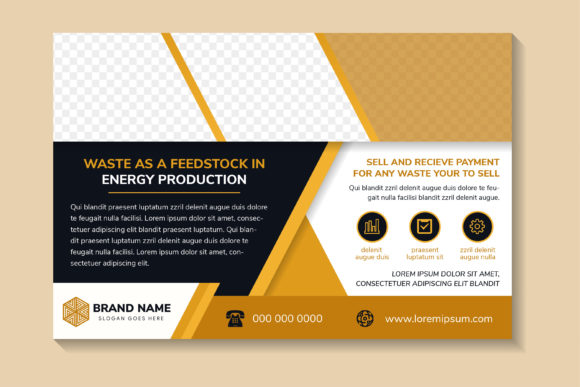
Waste as feedstock in energy production is a transformative approach that converts waste materials into valuable energy resources. This innovative method not only addresses the growing issue of waste management but also contributes to sustainable and renewable energy solutions. The Waste As Feedstock Energy Horizontal Fly design template, with its gold elements and modern layout, provides an engaging and visually appealing way to present this critical topic.
Understanding Waste As Feedstock in Energy Production
Waste as feedstock involves using various types of waste—such as agricultural, industrial, and municipal solid waste (MSW)—as raw materials for energy generation. This process can include technologies like incineration, gasification, and anaerobic digestion, which convert waste into electricity, heat, or biofuels. The Waste As Feedstock Energy Horizontal Fly template is designed to highlight these processes and their benefits, making it an excellent tool for businesses, organizations, and individuals interested in sustainable energy solutions.
Challenges and Goals in Waste Management and Energy Production
One of the primary challenges in waste management is the sheer volume of waste generated, which often ends up in landfills, contributing to environmental degradation and greenhouse gas emissions. Additionally, traditional energy sources, such as fossil fuels, are depleting and have significant environmental impacts. The goal of waste as feedstock energy is to mitigate these issues by:
- Reducing the amount of waste sent to landfills
- Decreasing reliance on non-renewable energy sources
- Lowering greenhouse gas emissions
- Creating a more sustainable and circular economy
How Waste As Feedstock Energy Can Help
The Waste As Feedstock Energy Horizontal Fly template showcases how this approach can be a practical and effective solution. By converting waste into energy, we can:
- Reduce the environmental footprint of waste disposal
- Generate clean, renewable energy
- Support local economies through job creation in the waste-to-energy sector
- Promote innovation and technological advancement in waste management and energy production
Practical Applications and Outcomes
Several practical applications of waste as feedstock energy are already in use. For example, anaerobic digestion plants convert organic waste into biogas, which can be used for heating, electricity, or vehicle fuel. Similarly, waste-to-energy facilities use incineration to generate electricity from MSW. These applications not only provide a sustainable energy source but also help in reducing the overall waste burden.
Examples and Recommendations
For businesses and organizations looking to adopt waste as feedstock energy, here are some recommendations:
- Conduct a feasibility study: Assess the potential for waste-to-energy projects based on local waste composition and energy needs.
- Engage with stakeholders: Involve local communities, government bodies, and industry partners to ensure support and collaboration.
- Invest in technology: Choose the most appropriate and efficient waste-to-energy technology for your specific context.
- Monitor and report: Regularly track and report on the environmental and economic benefits of your waste-to-energy initiatives.
Different Approaches for Different Users
Various users may approach the Waste As Feedstock Energy Horizontal Fly template differently based on their specific needs and contexts:
- Businesses: Use the template to create marketing materials and presentations to showcase their commitment to sustainability and innovation in waste management.
- Non-profits and NGOs: Employ the template to raise awareness and advocate for policies that support waste-to-energy initiatives.
- Educational institutions: Utilize the template to develop educational content and resources for students and researchers studying renewable energy and waste management.
- Government agencies: Leverage the template to communicate the benefits and progress of waste-to-energy projects to the public and policymakers.
Conclusion
The Waste As Feedstock Energy Horizontal Fly template offers a powerful and visually appealing way to communicate the importance and potential of waste as a feedstock in energy production. By adopting this approach, we can address the challenges of waste management and energy production, moving towards a more sustainable and environmentally friendly future. Whether you are a business, non-profit, educational institution, or government agency, this template can help you effectively share your message and contribute to a cleaner, greener world.
Thank you for choosing our store. We wish you a good day and look forward to any questions you may have.